

Do urinary catheters require a prescription? This is a question that often comes up among patients, caregivers, and even medical professionals. As a supplier of urinary catheters, I have encountered this question numerous times. In this blog post, I will delve into the topic, exploring the regulations surrounding urinary catheters and whether a prescription is necessary.
Understanding Urinary Catheters
Urinary catheters are medical devices used to drain urine from the bladder when a person is unable to do so naturally. They are commonly used in hospitals, nursing homes, and home care settings for patients with various conditions such as urinary retention, incontinence, or after certain surgeries. There are different types of urinary catheters available, each designed to meet specific needs. For example, the Nelaton Catheter - PVC is a simple, straight catheter used for intermittent catheterization, while the Nelaton Catheter - Silicone offers a more flexible and biocompatible option. The Foley Catheter - Latex Medical Use is a balloon catheter that can be left in place for a longer period.
Regulations Regarding Prescription
The requirement for a prescription for urinary catheters varies from country to country and even within different states or regions of a country. In many countries, urinary catheters are classified as medical devices, and their sale and distribution are regulated by health authorities.
In the United States, for instance, the Food and Drug Administration (FDA) regulates medical devices, including urinary catheters. Some urinary catheters are classified as Class I devices, which are considered to have a relatively low risk. These devices may be available over - the - counter in some cases, but many healthcare providers still recommend obtaining a prescription. Class II and Class III urinary catheters, which are associated with higher risks, typically require a prescription. A prescription ensures that the catheter is appropriate for the patient's condition, and it also helps in tracking the use of these devices for quality and safety purposes.
In the European Union, the Medical Devices Regulation (MDR) is in place to ensure the safety and performance of medical devices. Urinary catheters are subject to this regulation, and depending on the risk class assigned to the catheter, a prescription may be required. For example, catheters used for long - term indwelling applications are likely to be in a higher risk class and will usually need a prescription.
Reasons for Requiring a Prescription
There are several reasons why a prescription for urinary catheters is often required. Firstly, a healthcare provider can accurately assess a patient's condition to determine the most appropriate type of catheter. Different patients may need different sizes, materials, and types of catheters based on factors such as the patient's age, gender, the cause of urinary problems, and the expected duration of catheter use.
Secondly, using a catheter incorrectly can lead to serious complications such as urinary tract infections, bladder damage, or the formation of blood clots. A healthcare professional can provide proper training on how to insert, maintain, and remove the catheter safely. A prescription is also a way to ensure that patients receive this necessary education.
Finally, from a regulatory perspective, a prescription helps in monitoring the use of medical devices. It allows health authorities to track the distribution and use of catheters, which can be important for quality control and safety purposes.
Exceptions and Over - the - Counter Availability
In some cases, urinary catheters may be available without a prescription. For example, some basic intermittent catheters may be sold over - the - counter in pharmacies or online stores. These are often designed for short - term use and are considered to have a lower risk. However, even when available without a prescription, it is still advisable for patients to consult a healthcare provider before using a catheter.
As a Supplier
As a urinary catheter supplier, we understand the importance of adhering to regulations. We work closely with healthcare providers to ensure that our products are distributed in a legal and responsible manner. When a prescription is required, we require customers to provide a copy of the prescription before processing an order. This not only helps us comply with the law but also ensures that our products are used safely and appropriately.
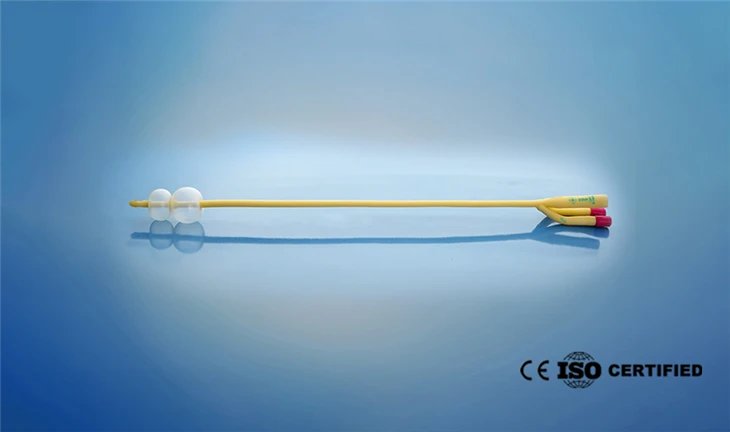

We also offer a wide range of urinary catheters to meet the diverse needs of our customers. Our product portfolio includes the Nelaton Catheter - PVC, Nelaton Catheter - Silicone, and Foley Catheter - Latex Medical Use. Each product is manufactured to the highest quality standards to ensure patient safety and comfort.
Contact for Procurement
If you are a healthcare facility, a distributor, or an individual in need of urinary catheters, we are here to assist you. We offer competitive pricing, high - quality products, and excellent customer service. Whether you need a prescription - based supply or are interested in our over - the - counter options, we can provide you with the right solution.
To start a procurement discussion, please reach out to us. We are eager to understand your specific requirements and work with you to meet your needs. Our team of experts is ready to answer any questions you may have about our products, the ordering process, or the regulatory requirements.
References
- Food and Drug Administration (FDA). (Year). Medical Device Classification Database.
- European Union. (Year). Medical Devices Regulation (MDR).
- Medical literature on the safe use of urinary catheters, including peer - reviewed journals and textbooks.